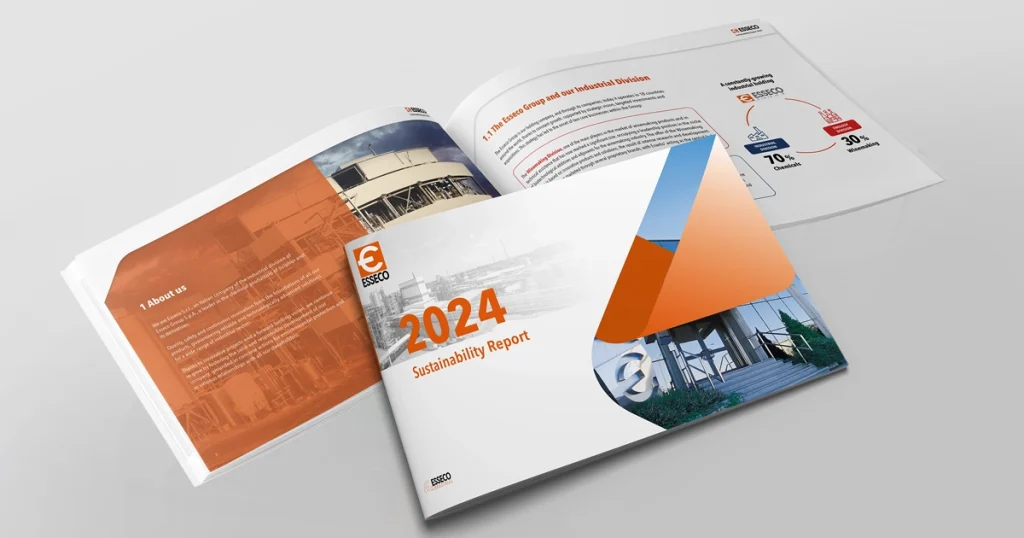
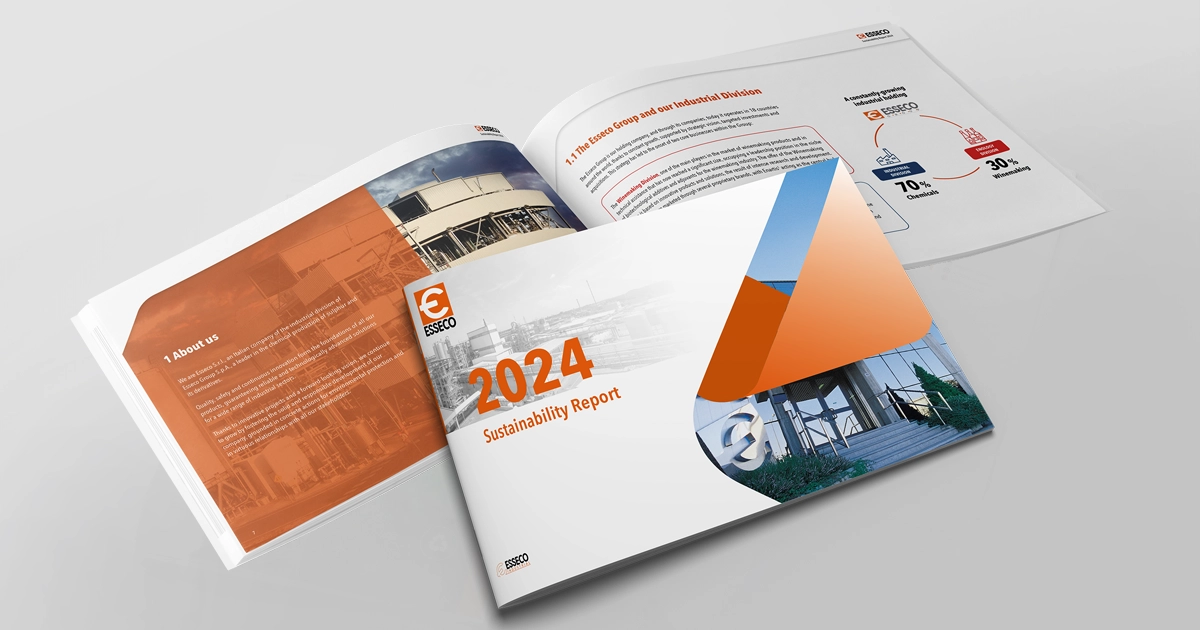
The 2024 Sustainability Report of Esseco Srl — part of the Esseco Industrial division of Esseco Group — marksanother step forward in the sustainable transformation of one of Northern Italy’s most important chemical hubs. Specializing in the production of sulfur and its derivatives, sulfites, and inorganic chemicals for multiple sectors — from winemaking to agri-food, from paper to pharmaceuticals — Esseco continues to demonstrate how innovation and responsibility can coexist within an industrial model. The report outlines a three-year journey of ESG objectives achieved, reaffirming the role of industrial chemistry as a concrete driver of ecological transition, innovation, and local development.
From its two production plants in San Martino di Trecate (Novara) and San Cipriano Po (Pavia), Esseco continues its path toward a more efficient and responsible chemistry. In 2024, direct emissions fell by 29% compared to 2022, while indirect emissions from purchased energy dropped by 85% (market-based), thanks to the exclusive use of certified renewable electricity and a 13% increase in self-generated energy. At the same time, water consumption decreased by 10% and hazardous waste by 51%, while the ratio of recycled materials to waste produced rose to 125%, a tangible sign of increasingly circular resource management. These results were achieved despite ongoing pressure on energy and raw material costs, confirming the resilience of Esseco’s business model.
The year also saw the launch of several major plant projects:the optimization of the sulfur combustion furnacethrough the “ECOChem Innovations” project, the introduction of an anti-acid treatment for sulfur melting, and the completion of a new production line for potassium polyaspartate solutions for the wine sector. Every plant investment is designed to reduce environmental impact, enhance safety, and strengthen long-term competitiveness. Esseco also invested in a rooftop photovoltaic system at the San Martino di Trecate plant, currently being installed, as the first step in a broader plan that will include similar projects at the San Cipriano Po facility.
On the social front, Esseco continues to stand out as a people-centered and resilient company: 99% of employees hold permanent contracts, with an average of 31 hours of training per person and a constantly expanding corporate welfare package. The company has alsoimplemented a 5% salary increase under the new chemical-pharmaceuticalcontract to support employees’ purchasing power. In 2024, the Piedmont Regional Health Authority recognized the San Martino di Trecate site as a “Workplace that Promotes Health” under the WHP (Workplace Health Promotion) program. For the first time in its history, Esseco also opened its doors to the local community with an Open Day that welcomed about 400 visitors — including families, citizens, and local representatives — strengthening dialogue between industry and society.
In terms of governance, the company has reinforced its accountability model by introducing a Supplier Code of Conduct and integrating ESG criteria into supplier qualification processes. Meanwhile, its two plants achieved top international recognitions: the Platinum EcoVadis medal for Trecate and the Gold medal for San Cipriano Po.
“2024 represents both an arrival and a new beginning,”stated Giuseppe Falsiroli, CEO of Esseco Srl. “We met all our environmental, social, and governance targets for the three-year period, cutting emissions and consumption, investing in more efficient plants, and improving training and workplace safety. These results are the outcome of the daily commitment of our employees and partners, whose expertise and passion make possible an Italian chemical model that is increasingly sustainable and connected to its local communities.”
The 2024 Sustainability Report thus reaffirms Esseco’s ability to combine productivity with responsibility, contributing to an industrial future where innovation becomes the key to balance among business, the environment, and society.